The Library: Humanity’s Last Temple
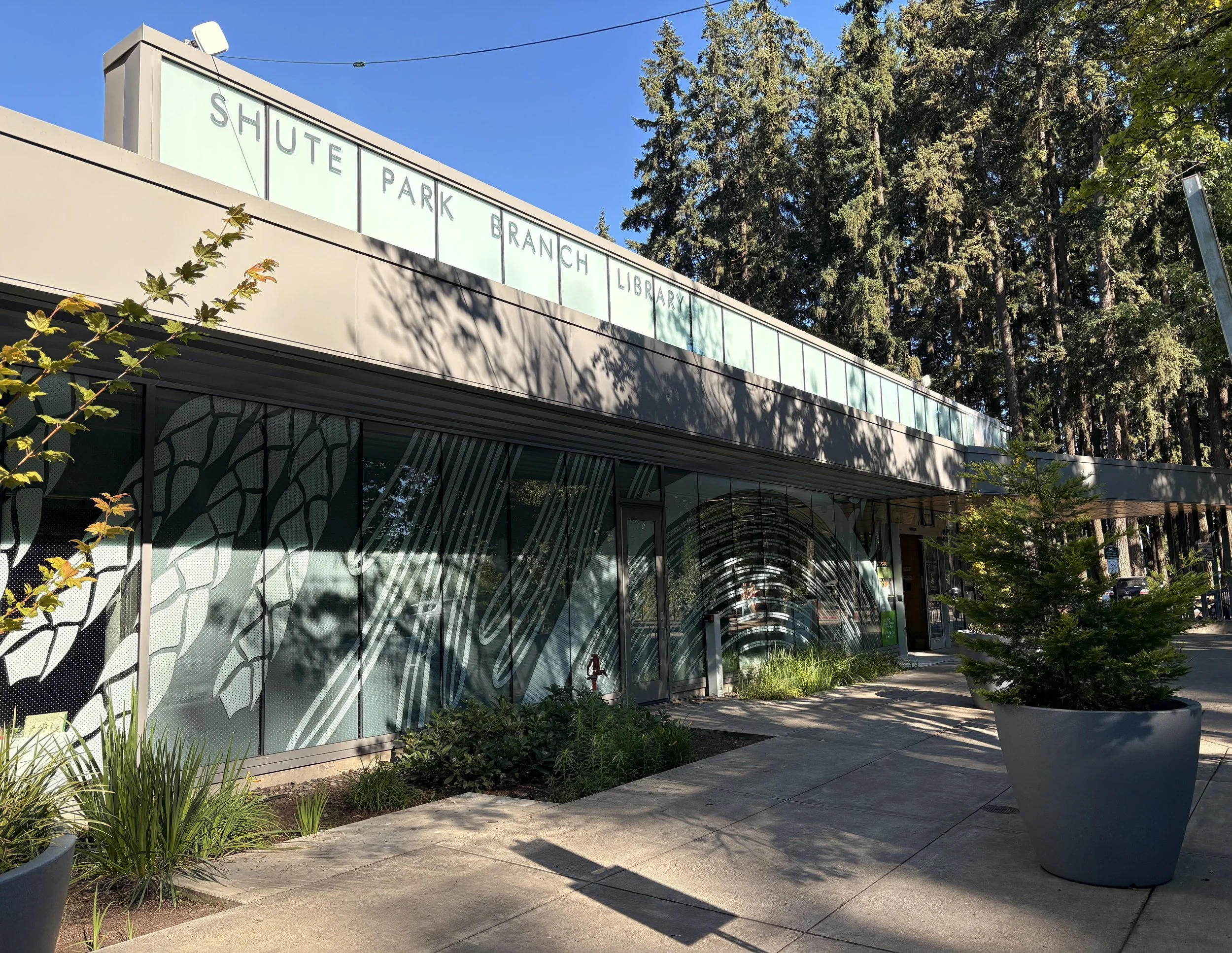
This blog is published in English first, followed by the full Spanish version.
This reflection begins with a small confusion I often hear, but it opens into something much greater.
In English, library looks almost identical to the Spanish word librería. At first, it seems like a harmless mistake, but it isn’t. That confusion does more than mix up two words—it changes how we see the world.
When we think of a library as a place where things must be bought, we put a price on what was never meant to be priced. We shrink what is infinite into something limited. We close doors that were always meant to remain open.
A public library is not a bookstore.
It is one of the last temples of our shared humanity.
A civic sanctuary where the essentials of life carry no cost:
water to quench thirst,
a chair to rest,
a book that sparks questions,
a computer that opens horizons,
and a voice that whispers: “welcome, this place is yours too.”
Recently, I had the opportunity to listen in library focus groups—to elders, to people who have lived without a roof, to mothers, to seekers. One sentence has stayed with me: “being poor is expensive, but not in the library.”
And that is true. Poverty charges a fee everywhere else. But here, humanity is returned without a bill. Dignity is offered without debt. Hope is planted with no expectation of return.
The library is more than a building filled with books.
It is refuge for the weary.
It is companionship for the lonely.
It is a bridge for those seeking opportunity.
It is a home for those who have felt lost.
The library is pause in the middle of chaos.
It is possibility in the middle of emptiness.
It is the promise that, even in a world determined to divide us, there still remains a place that calls us all by the same name: human.
And I do not speak only of services. I speak of encounters.
The moment when a mother discovers a story that awakens her child’s imagination.
The instant when a young person, staring at the glow of a computer screen, glimpses the possibility of a future.
The quiet transformation when someone arrives broken and leaves a little more whole, simply because they were received with respect.
Here, knowledge is planted.
Here, hope is nurtured.
Here, transformation is harvested.
Here, no one is a client. Everyone is a human being who matters.
Here, the invisible becomes visible: the smile of a child, the gratitude of an elder, the spark of creativity that appears when someone feels supported.
And I think of Puerto Rico, my homeland. A U.S. territory, but without a public library system like the one that exists here. I imagine what it would have meant if, in the most vulnerable neighborhoods, children had been given that small card that opens entire universes. How many lives would have been different. How many of my relatives, how many of my friends, might have walked another path if they had had, from their earliest years, free and easy access to books, to knowledge, to the chance to dream without limits.
That is what a library does: it democratizes the impossible.
It reminds us that access to knowledge is not a privilege—it is a right.
And that right, exercised from childhood, has the power to transform entire generations.
So I say this: the public library is not just a place.
It is a daily miracle.
The next time you hear someone say “bookstore”, correct them gently: it’s library.
And understand this: stepping into a library is never a small act.
It is entering the last territory where the sacred magic of being human is not bought… it is shared.
La Biblioteca: El Último Templo de la Humanidad
Esta reflexión comienza con una pequeña confusión que escucho con frecuencia, pero que se abre a algo mucho más grande.
En inglés, library se parece demasiado a librería. A simple vista parece un error inocente, pero no lo es. Esa confusión va más allá de las palabras: transforma la manera en que entendemos el mundo.
Si pensamos en una biblioteca como un lugar donde todo tiene que comprarse, le ponemos precio a lo que nunca debió tener precio. Reducimos lo infinito a lo limitado. Cerramos puertas que estaban destinadas a permanecer abiertas.
Una biblioteca pública no es una tienda de libros.
Es uno de los últimos templos de nuestra humanidad compartida.
Un santuario civil donde lo esencial de la vida no tiene costo:
agua para calmar la sed,
un asiento donde descansar,
un libro que enciende preguntas,
una computadora que abre horizontes,
y una voz que susurra: “bienvenido, este lugar también es tuyo.”
Hace poco tuve la oportunidad de escuchar, en unos grupos focales, a personas mayores, a quienes han vivido sin un techo, a madres, a jóvenes buscadores. Una de esas voces aún resuena en mí: “ser pobre cuesta caro, pero no en la biblioteca.”
Y es verdad. En casi todo lo demás, la pobreza cobra su precio. Pero aquí, entre estas paredes, la humanidad se devuelve sin factura. La dignidad se ofrece sin deuda. La esperanza se siembra sin esperar nada a cambio.
La biblioteca es mucho más que un edificio con libros.
Es refugio para el cansado.
Es compañía para el solitario.
Es un puente para quien busca oportunidades.
Es un hogar para quien alguna vez se sintió perdido.
La biblioteca es pausa en medio del caos.
Es posibilidad en medio del vacío.
Es la promesa viva de que, aun en un mundo que insiste en dividirnos, todavía existe un lugar que nos llama a todos por el mismo nombre: humanos.
Y no hablo solo de servicios. Hablo de encuentros.
Del instante en que una madre encuentra un cuento que despierta la imaginación de su hijo.
Del momento en que un joven, frente a la pantalla de una computadora, vislumbra la posibilidad de un futuro distinto.
De la transformación silenciosa de alguien que llega roto y se va un poco más entero porque fue recibido con respeto.
Aquí se siembra conocimiento.
Aquí se cultiva esperanza.
Aquí se cosecha transformación.
Aquí nadie es cliente. Todos somos seres humanos que importan.
Aquí lo invisible se hace visible: la sonrisa de un niño, la gratitud de un anciano, la chispa de creatividad que aparece cuando alguien se siente acompañado.
Y pienso en Puerto Rico, mi tierra. Un territorio de Estados Unidos, pero sin un sistema de bibliotecas públicas como el que existe aquí. Imagino lo que habría significado que, en los barrios más vulnerables, a los niños se les hubiera entregado esa pequeña tarjeta que abre universos enteros. Cuántas vidas habrían sido distintas. Cuántos de mis familiares, cuántos de mis amigos habrían tenido otro destino si desde pequeños hubiesen tenido acceso fácil y gratuito a los libros, al conocimiento, a la oportunidad de soñar sin límites.
Eso es lo que hace una biblioteca: democratiza lo imposible.
Nos recuerda que el acceso al conocimiento no es un privilegio: es un derecho.
Un derecho que, ejercido desde la infancia, tiene el poder de transformar generaciones enteras.
Por eso digo: la biblioteca pública no es solo un lugar.
Es un milagro cotidiano.
La próxima vez que escuches a alguien decir “librería”, corrige con cariño: es biblioteca.
Y entiende esto: cruzar sus puertas nunca es un acto pequeño.
Es entrar al último territorio donde la magia sagrada de lo humano no se compra… se comparte.