When Technology Outruns People, Libraries Walk Beside Them
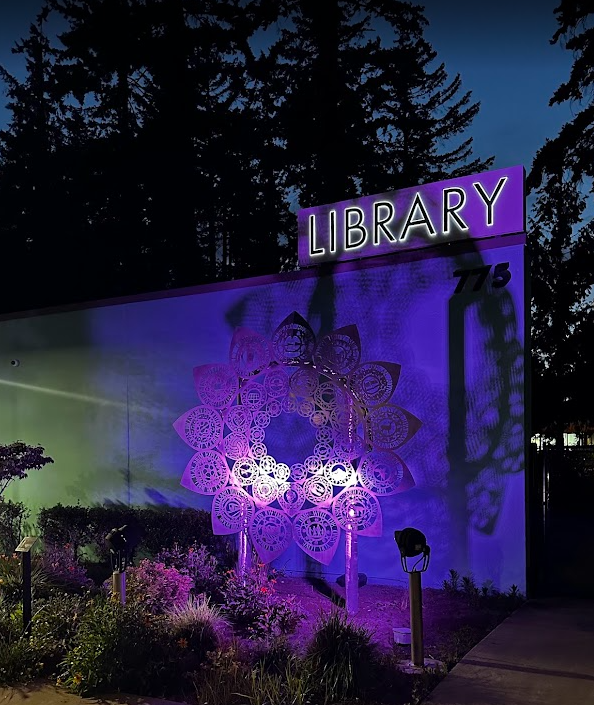
This blog is published in English first, followed by the full Spanish version.
Technology advances like a relentless river. Every day, a new application, a new platform, a new way of communicating appears. And without realizing it, we begin to assume that everyone knows how to use them, that everyone has internet access, that everyone understands the language of the screen. But that is not the reality.
After the pandemic, that truth became impossible to ignore: the world turned digital overnight, but not everyone was able to keep pace. Many were left behind—not because they lacked the will, but because they had never been given the opportunity to learn.
This is where the library steps in. Every day, in classrooms and community rooms, at tables with laptops and cell phones, we help dismantle those barriers. We don’t just lend devices—we build bridges. We don’t just teach keyboards and screens—we restore confidence.
Now imagine this: not only struggling with technology, but also with language. Imagine not knowing how to use a smartphone and not speaking English. How do you find your place in a world moving faster than you can comprehend? How do you live in tune with your environment if you don’t understand the instructions? How do you make good decisions when the information comes to you in a language you don’t speak and in a format you don’t know how to use?
We see it in the library every day. People arrive carrying this double barrier: technological and linguistic. And yet, when they find a space where things are explained in their own language, with patience and empathy, everything changes. Because it is never just about learning how to use a phone or a computer—it is about recovering the confidence to participate, to belong, to say: “I can do this too.”
And there is another silent wall: the internet itself. We assume it is a universal right, but for many it remains a luxury. Families struggle to afford it. Communities live in areas where the signal is weak or nonexistent. Without access, what happens? The ability to learn, to connect, to decide independently is lost.
Meanwhile, the world races ahead at the speed of social media. TikTok dictates global trends, news is consumed in seconds, algorithms decide what we see and even what we think. But what about those who are not connected? Where do their voices go? What happens to those who still rely on paper, on a newspaper, on a physical book?
We all talk about the importance of protecting the planet, about sustainability, about reducing paper use. And yes, that mission is vital. But we must also remember that paper remains, for many, an essential tool. The printed book, the flyer, the sheet in hand go where the screen cannot. Paper doesn’t run out of battery, doesn’t require a password, doesn’t exclude because of language. In this sense, paper and technology are not enemies—they are allies, working together to ensure that no one is left behind.
The digital divide is not just about devices. It is about equity, language, access, and dignity. And as a society, we have a responsibility: to understand that progress cannot be the privilege of a few. That what is supposed to connect us must not disconnect us.
When we help someone learn how to use technology, we are not only helping that one person—we are helping ourselves. Because a society where everyone evolves is a society that is stronger, fairer, and more human.
The library proves this every day. It is not a warehouse of books. It is a bridge. A refuge. A space where empathy becomes action, where languages are embraced, where paper and screens coexist so that no one is left behind.
As Paulo Freire once wrote: “Education does not change the world. Education changes people. And people change the world.” That transformation begins here, in the simple act of guiding someone through their first message, their first form, their first set of instructions in the language they understand.
Because the true digital divide is not technological—it is human. And when we decide to cross it together, we discover that the most important evolution does not lie in the next technological advance, but in our ability to grow with one another, leaving no one behind.
Cuando el futuro acelera, la biblioteca construye puentes para todos
La tecnología avanza como un río imparable. Cada día surge una nueva aplicación, una nueva plataforma, una nueva forma de comunicarnos. Y, sin darnos cuenta, damos por sentado que todos sabemos usarlas, que todos tenemos internet, que todos entendemos el idioma de la pantalla. Pero no es así.
Después de la pandemia, esa verdad se hizo más clara: el mundo se volvió digital de la noche a la mañana, pero no todos pudieron seguir el ritmo. Muchos quedaron atrás, no por falta de voluntad, sino porque nunca se les dio la oportunidad de aprender.
Y aquí es donde entra la biblioteca. Cada día, en aulas improvisadas, en salas comunitarias, en mesas con laptops y celulares, ayudamos a derribar esas barreras. No solo prestamos dispositivos: tendemos puentes. No solo enseñamos a usar un teclado o una pantalla: devolvemos confianza.
Imagina no saber manejar un celular ni dominar el inglés. ¿Cómo encajas en un mundo que se mueve más rápido de lo que puedes comprender? ¿Cómo convives con tu entorno si no entiendes las instrucciones? ¿Cómo tomas decisiones correctas si la información te llega en un idioma que no hablas y en un formato que no sabes usar?
En la biblioteca lo vemos todos los días. Personas que llegan confundidas, frustradas, cargando esa doble barrera: tecnológica y lingüística. Y, sin embargo, cuando encuentran un espacio donde se les explica en su propio idioma, con paciencia y empatía, todo cambia. Porque no se trata solo de aprender a usar un teléfono o una computadora. Se trata de recuperar la confianza para participar, para pertenecer, para decir: “Yo también puedo.”
Y hay otro muro silencioso: el internet. Lo damos por sentado como si fuera un derecho universal, pero para muchos sigue siendo un lujo. Hay familias que no pueden pagarlo. Hay comunidades enteras donde la conexión es débil o inexistente. Y sin acceso, ¿qué pasa? Se pierde la posibilidad de aprender, de conectarse, de decidir con autonomía.
Mientras tanto, el mundo se acelera al ritmo de las redes sociales. TikTok marca tendencias globales, las noticias se consumen en segundos, y los algoritmos deciden qué vemos y qué pensamos. Pero, ¿qué pasa con quienes no tienen acceso? ¿Dónde quedan las voces que no se conectan? ¿Dónde quedan quienes todavía buscan respuestas en el papel, en el periódico, en el libro físico?
Todos hablamos de la importancia de cuidar el planeta, de la sustentabilidad, de reducir el uso de papel. Y sí, esa misión es vital. Pero también debemos recordar que el papel sigue siendo, para muchos, una herramienta esencial. El libro impreso, el folleto, la hoja en mano llegan donde la pantalla no siempre puede llegar. El papel no necesita batería, no exige contraseña, no excluye por idioma. En ese sentido, papel y tecnología no son enemigos: son aliados que, juntos, pueden garantizar que nadie se quede sin acceso.
La brecha digital no es solo una cuestión de dispositivos. Es un tema de equidad, de idioma, de acceso, de dignidad. Y como sociedad tenemos una responsabilidad: entender que el progreso no puede ser privilegio de unos pocos. Que lo que se supone que nos conecte no nos desconecte.
Cuando ayudamos a alguien a aprender a usar la tecnología, no solo lo estamos ayudando a él o a ella: nos estamos ayudando a todos. Porque una sociedad donde todos evolucionan es una sociedad más fuerte, más justa, más humana.
La biblioteca lo demuestra cada día. No es un depósito de libros. Es un puente. Un refugio. Un espacio donde la empatía se convierte en acción, donde los idiomas se abrazan, donde las pantallas y el papel conviven para que nadie se quede atrás.
Como escribió Paulo Freire: “La educación no cambia al mundo: cambia a las personas que van a cambiar el mundo.” Y esa transformación empieza aquí, en el gesto sencillo de acompañar a alguien a enviar su primer mensaje, a llenar su primer formulario, a leer sus primeras instrucciones en el idioma que entiende.
Porque la verdadera brecha digital no es tecnológica, es humana. Y cuando decidimos cruzarla juntos, descubrimos que la evolución más importante no está en el próximo avance tecnológico, sino en la capacidad de crecer unos con otros, sin dejar a nadie atrás.